15+ Years of Empty Promises
Hamilton Road residents and the wider Broomhouse community have lived with deteriorating conditions for over 15 years. Minimal short-term fixes by Glasgow City Council have repeatedly failed, with no lasting improvement or consistent commitment or accountability. The community has lodged hundreds of complaints, emails and photographs over 15 years showing the horrendous conditions they are forced to live with — but the situation has worsened.
Hamilton Road was never designed to carry the traffic it now bears. Two major structural changes over the past two decades have compounded the problem — and neither was accompanied by any upgrade to the road itself.
The M74 Completion project opened in June 2011, creating a new motorway through the south of Glasgow at a cost of nearly £700 million. While it relieved congestion on the M8, it fundamentally changed traffic routing across Glasgow's south-east. The junction at Daldowie connects the M73 and M74 directly to the Hamilton Road corridor, making it a natural rat-run for HGVs to the Patersons waste facility, amongst other heavy industrial businesses in the vicinity.
In the early 2000s, Broomhouse was designated a Community Growth Area by Glasgow's City Development Plan — releasing green belt land for housing. Construction continued for over a decade, transforming the area into one of Glasgow's largest new housing estates. This dramatically increased population and vehicle movements along Hamilton Road, the primary arterial route, without any corresponding road capacity or surface upgrade.
In 2014, despite objections from Broomhouse residents and councillors, Glasgow City Council Planning Committee granted Patersons of Greenoakhill a variation under their permit — allowing them to operate 7 days a week including bank holidays and extending operating hours from 7am to 6pm. This means that since 2014, HGVs use Hamilton Road from 6.30am–6pm every day of the year except two (Christmas Day and New Year's Day), giving residents no respite from the heavy traffic, vibrations and noise.
Sources: Scottish Roads Archive (M74 Completion); Glasgow City Development Plan (Broomhouse Community Growth Area)
Under the Roads (Scotland) Act 1984, local authorities have a legal duty to manage and maintain roads in a safe condition. When a road is used in a manner inconsistent with its design capacity, that duty becomes harder — and more expensive — to fulfil. Residents and BCC have raised that GCC may be in breach of this duty, and that residents' human rights are being affected. GCC has a legal obligation to act.
Hamilton Road Stakeholder Meeting & Site Visit
The first stakeholder meeting about Hamilton Road took place on 8th April 2026. This is the first time key stakeholders and partners have been round the table. Representatives from Police Scotland, GCC Planning, GCC Roads (NRS), GCC Street Cleaning Team, representatives from Broomhouse Community Council, Councillor John Daly, and two residents from Hamilton Road were in attendance.
The purpose of the meeting was to bring all stakeholders together to formally discuss Hamilton Road. It was an opportunity for BCC to present the issues the community face and for residents to share their real-life experiences of living on Hamilton Road. Possible solutions and plans for long-term improvements were discussed. The next meeting will be August 2026.
Following the April meeting, a formal site visit took place on Hamilton Road. BCC representatives, Hamilton Road residents, Councillor Lalley, Councillor Daly, John Grady MP and a representative from GCC NRS department joined to witness first-hand what it is like living, driving and walking on Hamilton Road.
Walked the Road
The group walked the full stretch together, observing road condition, lorry movements and vibrations first-hand. The road was busy during the visit, giving councillors, the MP, and the roads representative a direct experience of conditions drivers, pedestrians and residents face every day.
Inside a Resident's Home
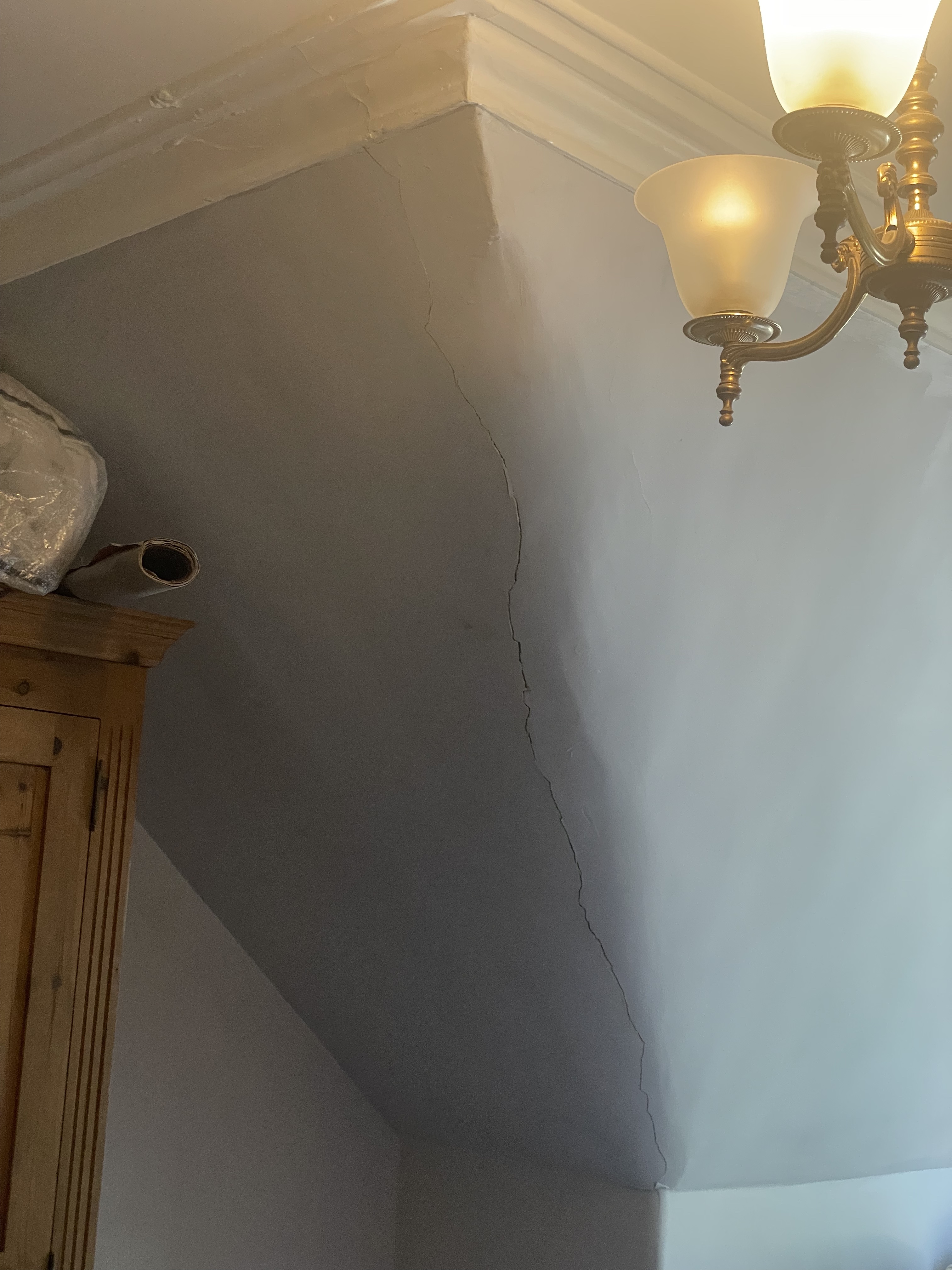
A resident of Hamilton Road invited the full group into their home to see the cracks in the walls and witness the vibrations caused by passing HGVs. A BCC representative described the experience as very powerful and shocking for those in attendance — many of whom had not previously understood the scale of the impact on daily life.
This footage was recorded inside a resident's home on Hamilton Road. It shows the vibrations caused by passing HGVs — the same vibrations that have caused visible cracks in walls and ceilings. This is what life on Hamilton Road feels like every day.
Footage courtesy of a local resident. Shared with permission for community awareness purposes.
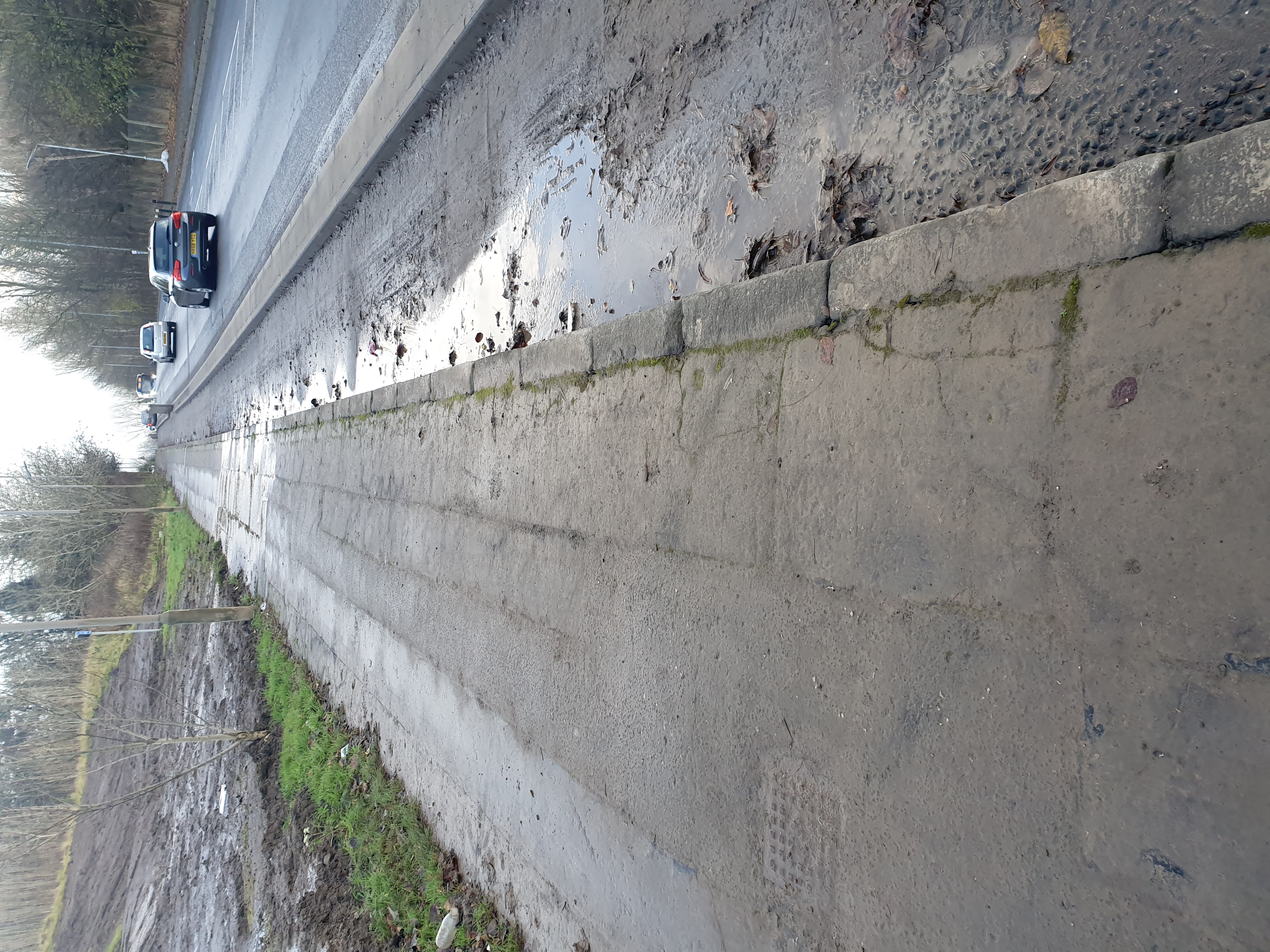
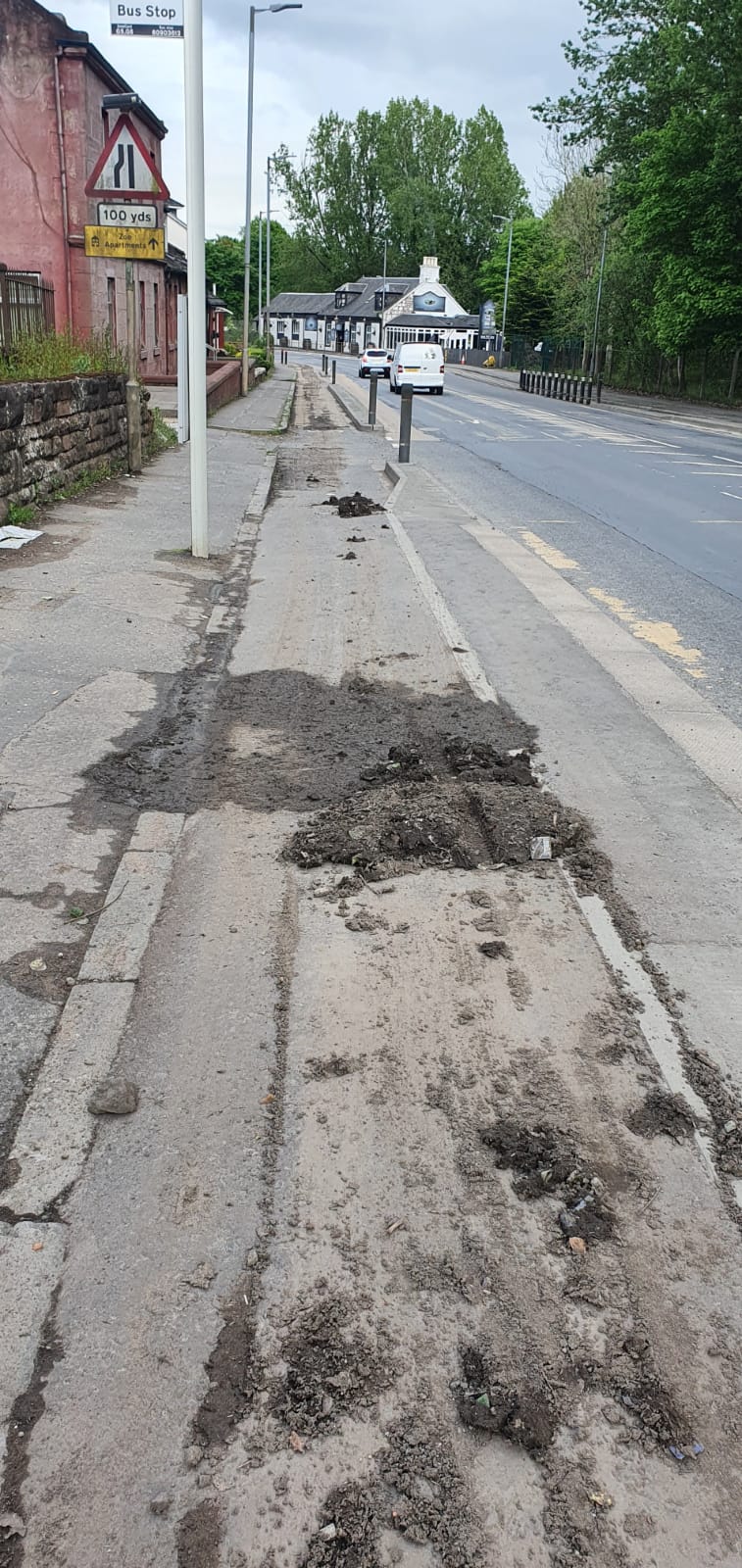
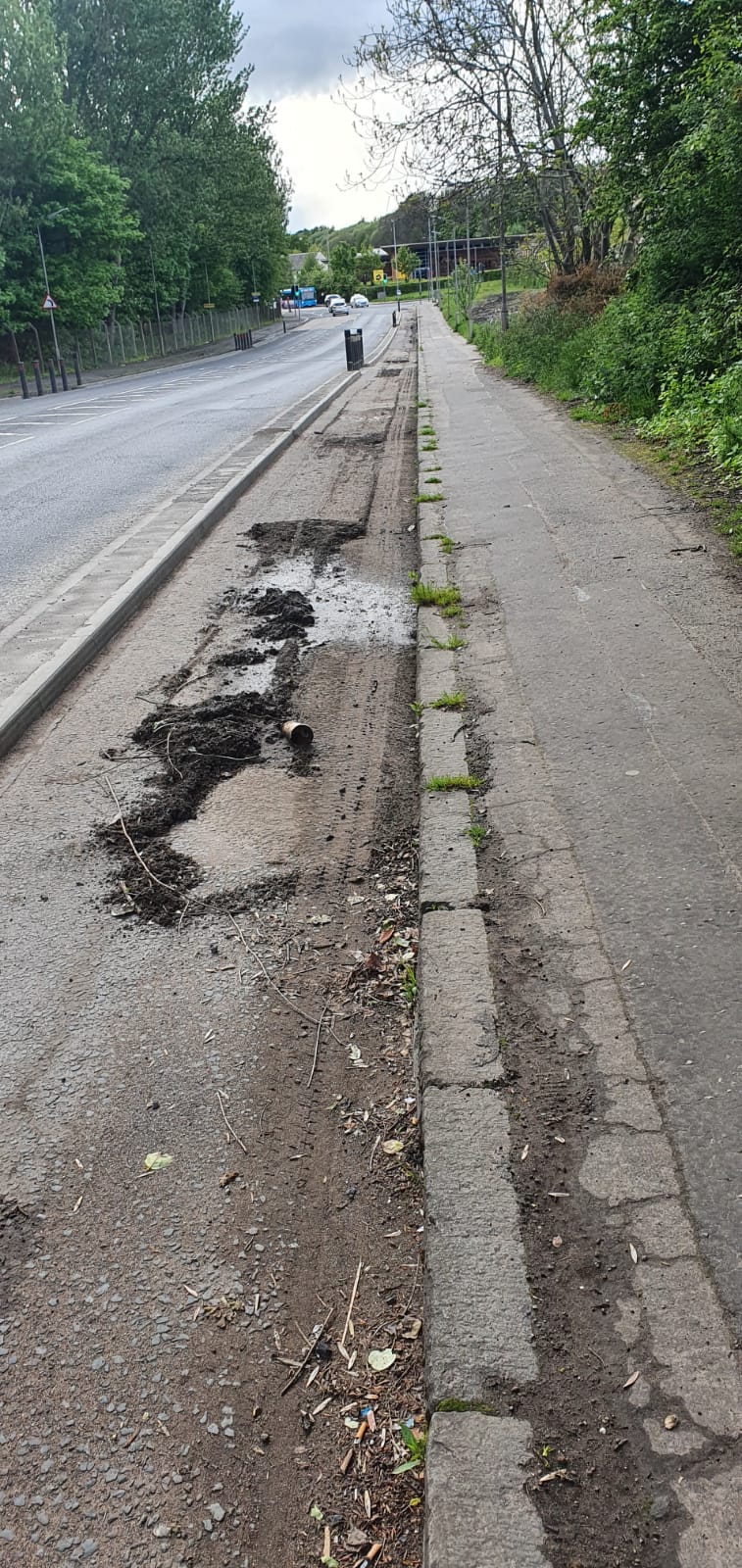
This is what living on Hamilton Road looks like. Cracks in walls, ceilings and sandstone exteriors caused by constant HGV vibration. Dirt and dust coating pavements, cycle lanes, gardens and the outsides of homes. A road surface that is breaking apart. These are not isolated incidents — this is the daily reality for residents and for drivers and pedestrians using Hamilton Road.

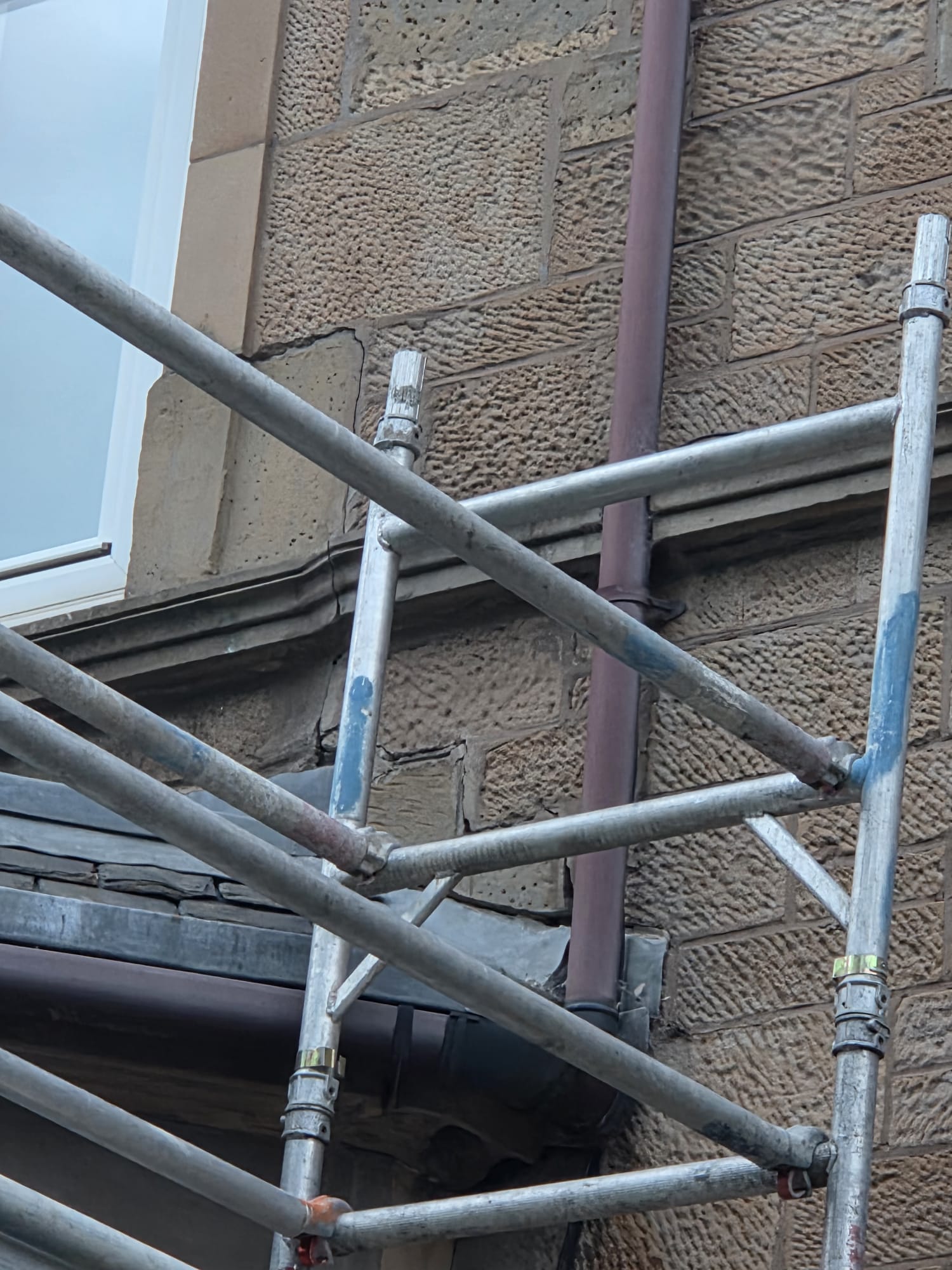
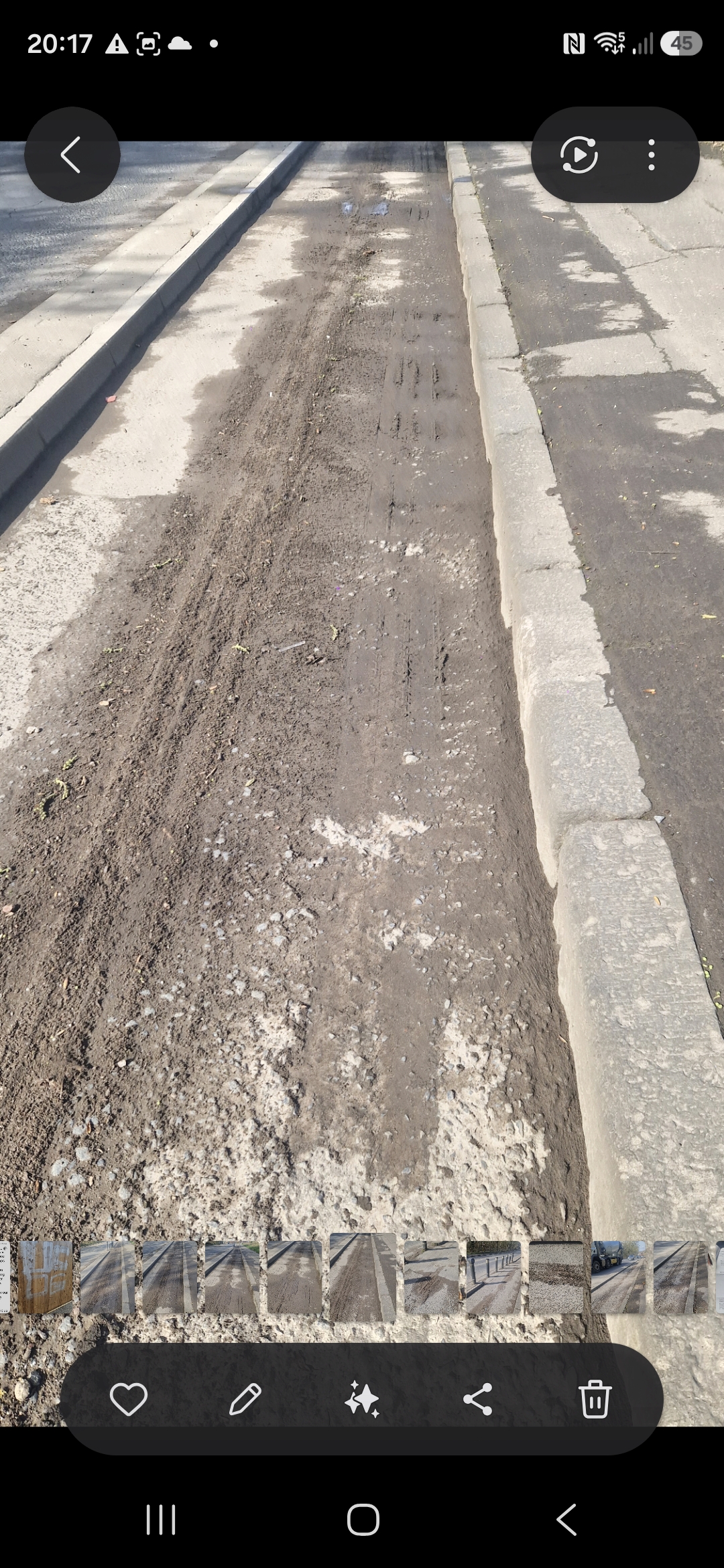
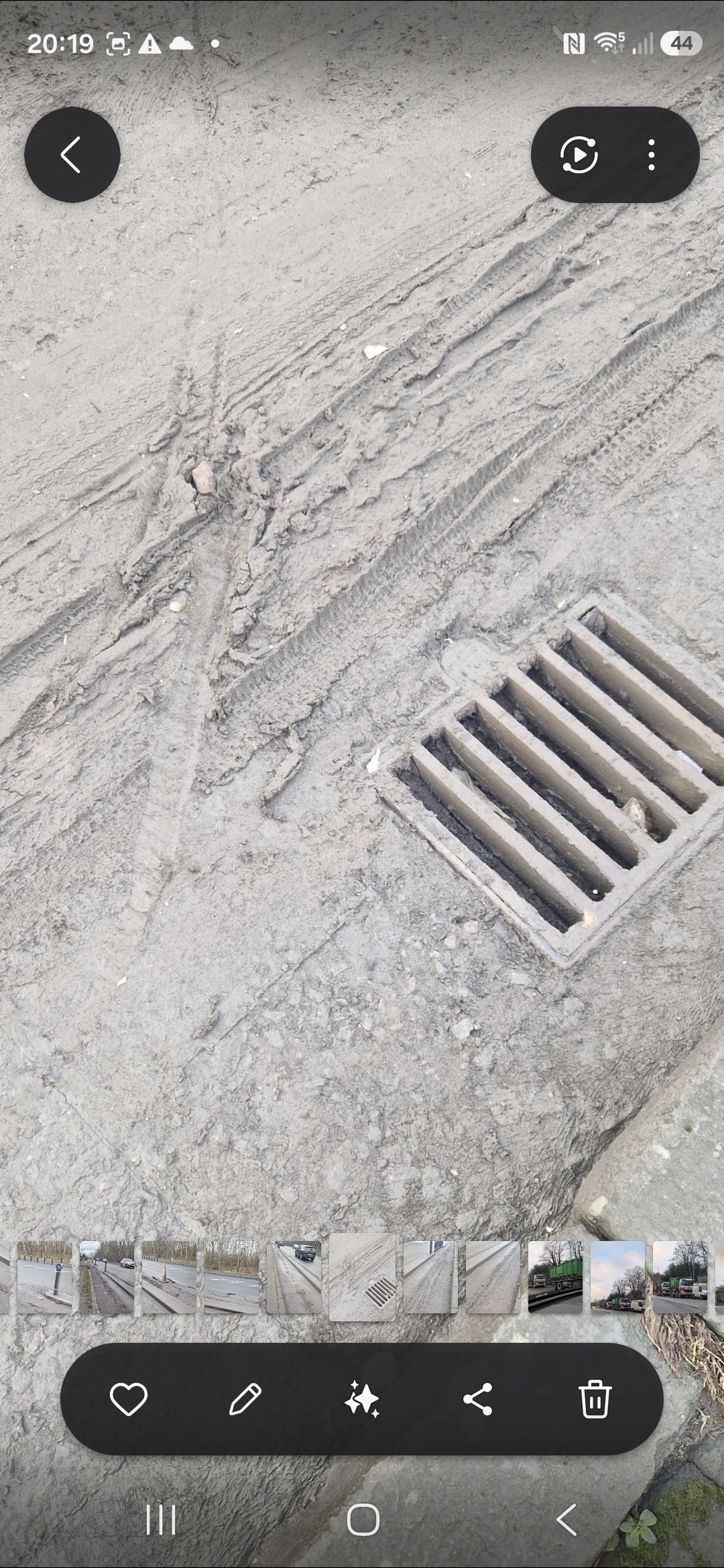
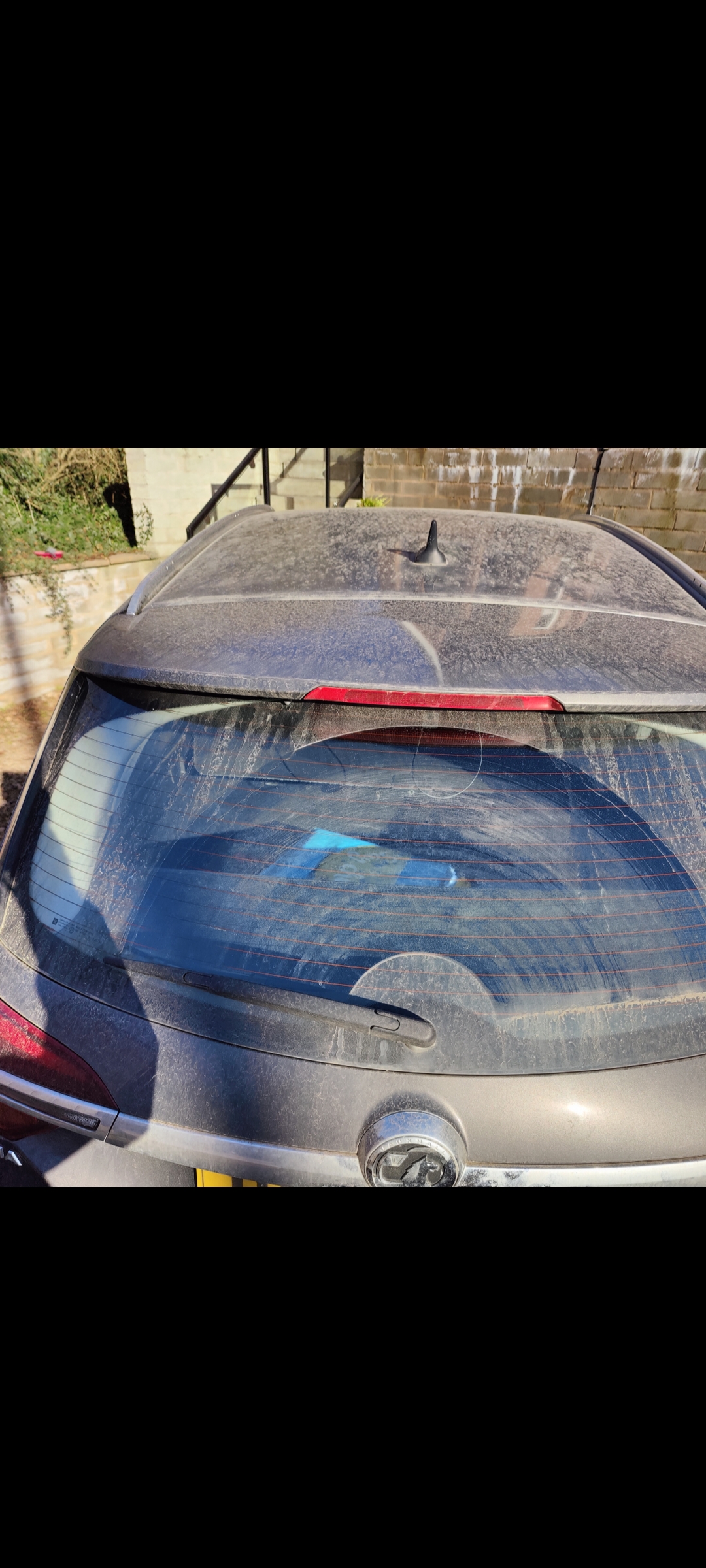
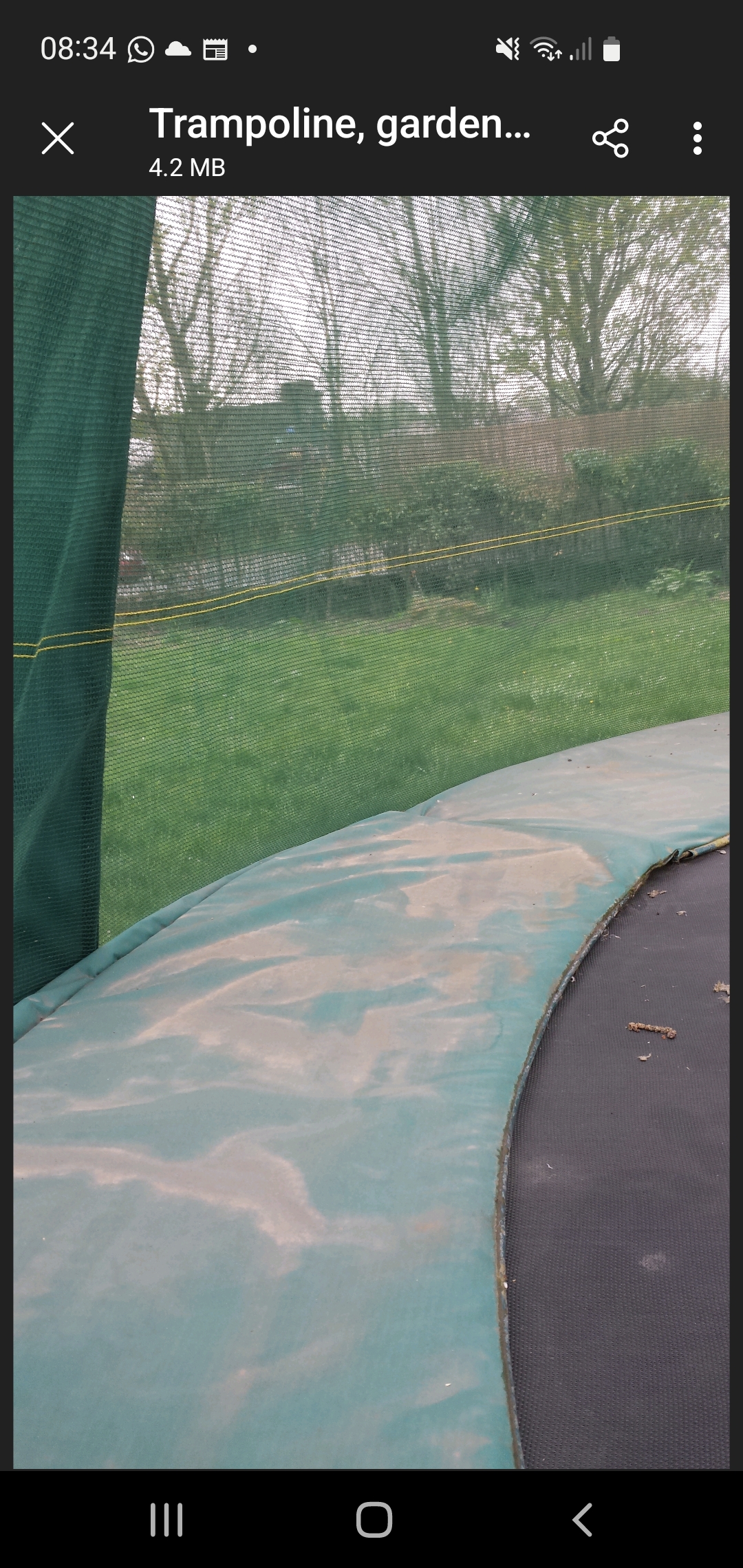
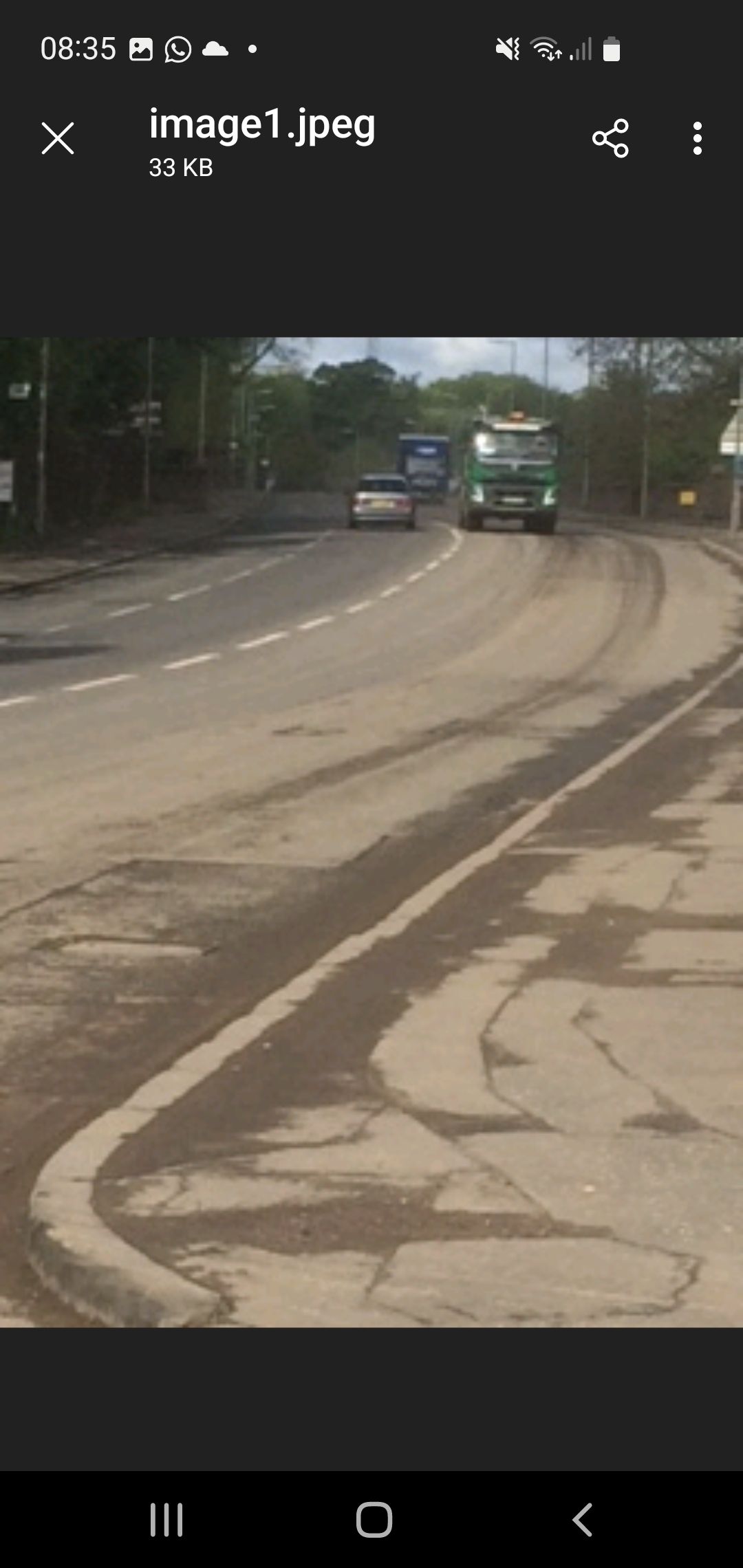
Footage shared with permission for community awareness purposes.
The primary aim is to reduce the volume of HGVs using Hamilton Road. Every other problem — road condition & potholes, vibration, property damage, dust, danger to pedestrians and drivers — flows from the sheer volume of heavy traffic in our community.
A Timeline — Key Dates
15+ years of complaints, temporary fixes, and missed commitments — with no lasting resolution.
Broomhouse designated a Community Growth Area by Glasgow's City Development Plan. Green belt land released for housing. Construction continues for over a decade, adding thousands of new family homes — all funnelling onto Hamilton Road as the primary arterial route. The road receives no corresponding upgrade.
M74 Completion opens. The £692 million extension connects the M74 to the M8 through Glasgow's south side. The junction at Daldowie connects the M73 and M74 directly to the Hamilton Road corridor, making it a natural rat-run for HGVs serving Patersons and other heavy industrial businesses in the vicinity. No road improvement funding follows for Hamilton Road.
Glasgow City Council Planning Committee grants Patersons of Greenoakhill a permit variation — allowing the relocation of a concrete batching plant and a variation to operating days and times, allowing the site to operate 7 days a week including bank holidays, from 7am–6pm. From this point on, HGVs use Hamilton Road from 6.30am–6pm every day of the year except Christmas Day and New Year's Day. Residents are given no respite.
Broomhouse Community Council and residents continually raise issues to local councillors, Glasgow City Council departments and SEPA regarding the condition of Hamilton Road as a result of the huge volume of HGVs using it every day. Hundreds of emails with photographic evidence are sent to Glasgow City Council requesting action for the wellbeing of residents.
An interactive speed sign is installed on Hamilton Road heading East — removed after a year.
Following repeated requests, dust monitoring is carried out by GCC at a residential property on Hamilton Road. Results are concerning — PM10 pollution levels averaging 17.9 µg/m³, just below the target limit of 18 µg/m³, with one exceedance recorded. No monitoring has taken place in the years since.
SEPA confirm a new wheel wash has been installed at the landfill entrance to help deal with dust and dirt escaping from site.
Following two years of pressure from BCC and residents, cycle lanes are installed on Hamilton Road and the road is changed to 30mph. GCC has however never been able to maintain and clean them properly due to the volume of dirt and dust.
Automatic Traffic Count (ATC) speed survey carried out. Results demonstrate persistent non-compliance with the 30mph limit — the 85th percentile speed reached 36.7mph. Survey carried out at the Mailcoach bend where traffic naturally slows, meaning real-world speeds on the straight sections are likely higher.
ATC survey repeated. 85th percentile speed: 35.3mph — still above the compliance threshold, and still recorded at the Mailcoach bend where traffic naturally slows.
ATC survey repeated. 85th percentile speed: 37.7mph overall, with one direction reaching 38.1mph — the worst result across all three surveys.
GCC communicate that Hamilton Road is on the programme to be swept every 21 days.
BCC, councillors, MP, MSP and hundreds of residents object to plans that would see the lifespan of the landfill site extended — meaning more HGVs for years to come.
Cllr Lalley secures a new pedestrian crossing on Hamilton Road — the existing footbridge had become inaccessible to those with mobility issues.
Following repeated requests, a deep clean of pavements and road surface is carried out.
A new wave of resident complaints prompts BCC to escalate and demand a formal multi-stakeholder meeting.
First ever formal multi-stakeholder meeting held at Dogs Trust. GCC Roads, GCC Planning Enforcement, GCC Street Cleaning, Police Scotland, NRS, elected members, and residents all attend together for the first time.
First formal site visit takes place. Councillors Kevin Lalley and John Daly, John Grady MP, NRS roads representative, BCC representatives and Hamilton Road residents walk the road together. A resident invites the group into their home to witness cracks and vibrations first-hand — described as a powerful and shocking experience for all in attendance. NRS representative cautiously optimistic about extensive resurfacing between Dogs Trust and Blackbear being approved.
Resurfacing of part of Hamilton Road (between Mount Vernon station and Dogs Trust) is planned to take place.
What's Wrong
Tap each issue to read more detail.
The HGV Problem
1,000+Up to 1,000+ heavy goods vehicles use Hamilton Road every single day — at up to 100 per hour at peak times. Speeding is a significant concern, with survey data indicating many vehicles exceed the 30mph limit. This is a root cause of most of the road's issues: structural damage, vibration, dust, and danger to pedestrians.
Potholes & Resurfacing
Repeated patching that lasts 1–2 months at best.
NRS confirmed: Resurfacing from Mount Vernon Rail Station to Dogs Trust only has been approved for 2025–2026. Patching is planned for other sections. BCC and residents have formally requested this be extended to cover the full route to Blackbear roundabout, and have stated that patching alone is not sufficient.
Why patching doesn't work: The images in the Evidence section show what engineers call "crocodile cracking" — a tell-tale sign that the road's sub-base has failed. Once this happens, no amount of surface patching will hold. The only solution is full repaving.
Vibrations & Structural Damage
Homes cracking. Ceilings falling. Houses shaking.
Vibration monitoring has been formally requested to build the evidence base needed for legal and planning action. GCC has a statutory duty under the Roads (Scotland) Act 1984 to act.
Dirt & Dust
Cycle lanes and pavements unusable due to filth.
GCC's own street cleaning team acknowledged the standard is unacceptable and that current machinery is not fit for purpose. Cleaning that does happen is scheduled at 8am Sunday mornings or 11pm at night — providing no meaningful respite for residents.
Speeding
Survey data confirms speeding is widespread.
Glasgow Live recently reported that drivers have been charged with speeding offences on Hamilton Road following a police operation — demonstrating that the problem is real, measurable, and serious enough to warrant enforcement action. The article is available at Glasgow Live.
Residents requested flashing speed signs at two key points: one from Blackbear heading west and one after Dogs Trust at the lights. A pedestrian crossing between Dogs Trust and Mailcoach was also raised as a priority safety measure.
Road Layout & Design
The road isn't fit for its current use.
• Recategorising the road from A to B classification
• Redesigning cycle lanes between Blackbear and Dogs Trust to mirror the layout further along Hamilton Road
• Introducing a no-right-turn restriction exiting Patersons
• An additional pedestrian crossing between Mailcoach and 381 Hamilton Road — creating a safe crossing for residents and the community accessing bus stops and Greenoakhill Woodland, and helping to reduce vehicle speeds on this stretch
• Revisiting an M74 off-ramp option to reduce through traffic
• Adding bus shelters at all stops for pedestrian safety
Parked Lorries
HGVs blocking cycle lanes and parked in front of homes.
Note: Enforcement action was successfully taken at Dovecot regarding parked lorries — this demonstrates that enforcement mechanisms exist and can be applied on Hamilton Road too.
Why Patching Doesn't Work
The photos below, taken during the May 2026 site visit, show what engineers call "crocodile" or "alligator" cracking — a diagnostic sign that the road's sub-base has structurally failed.
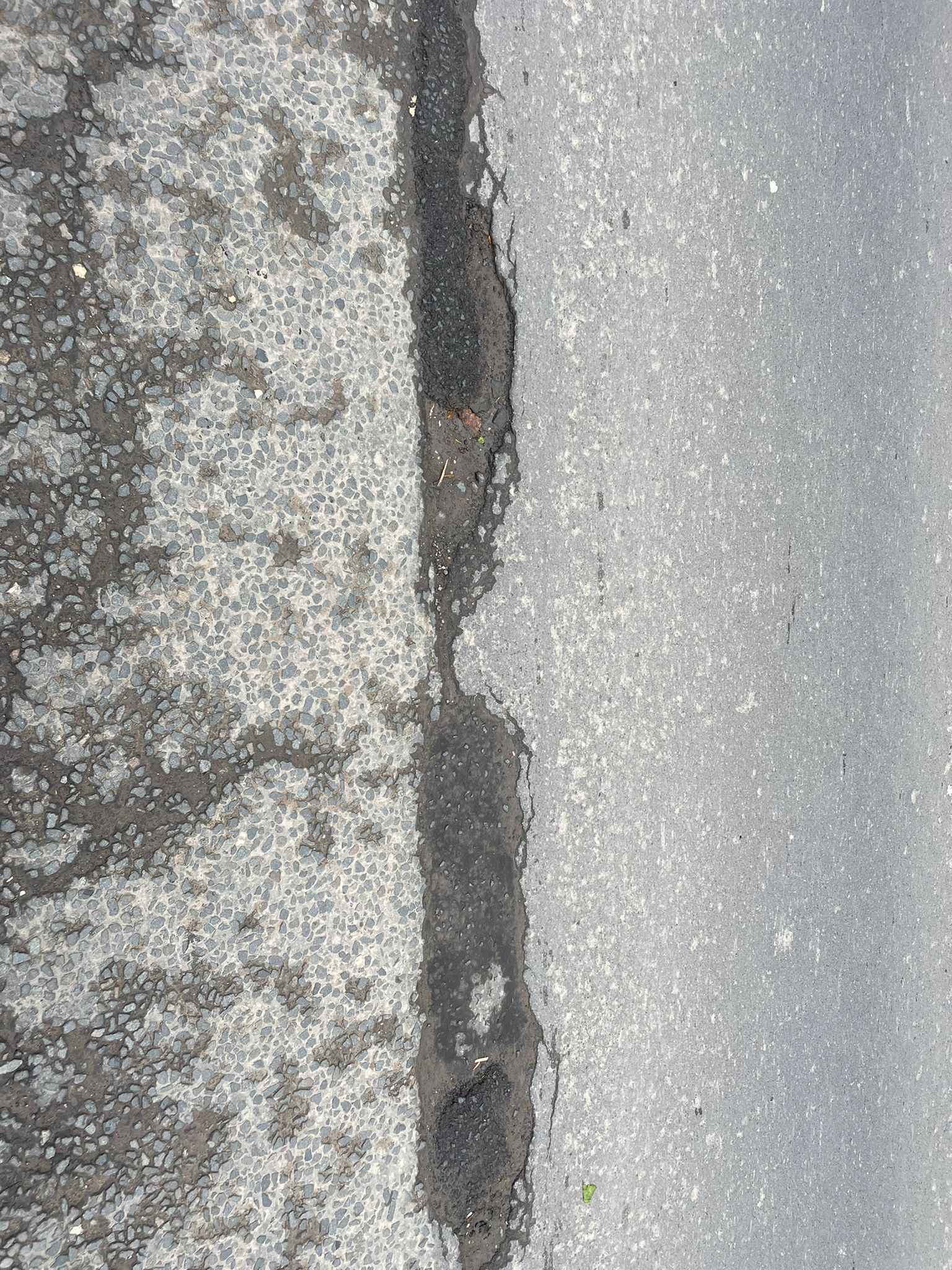
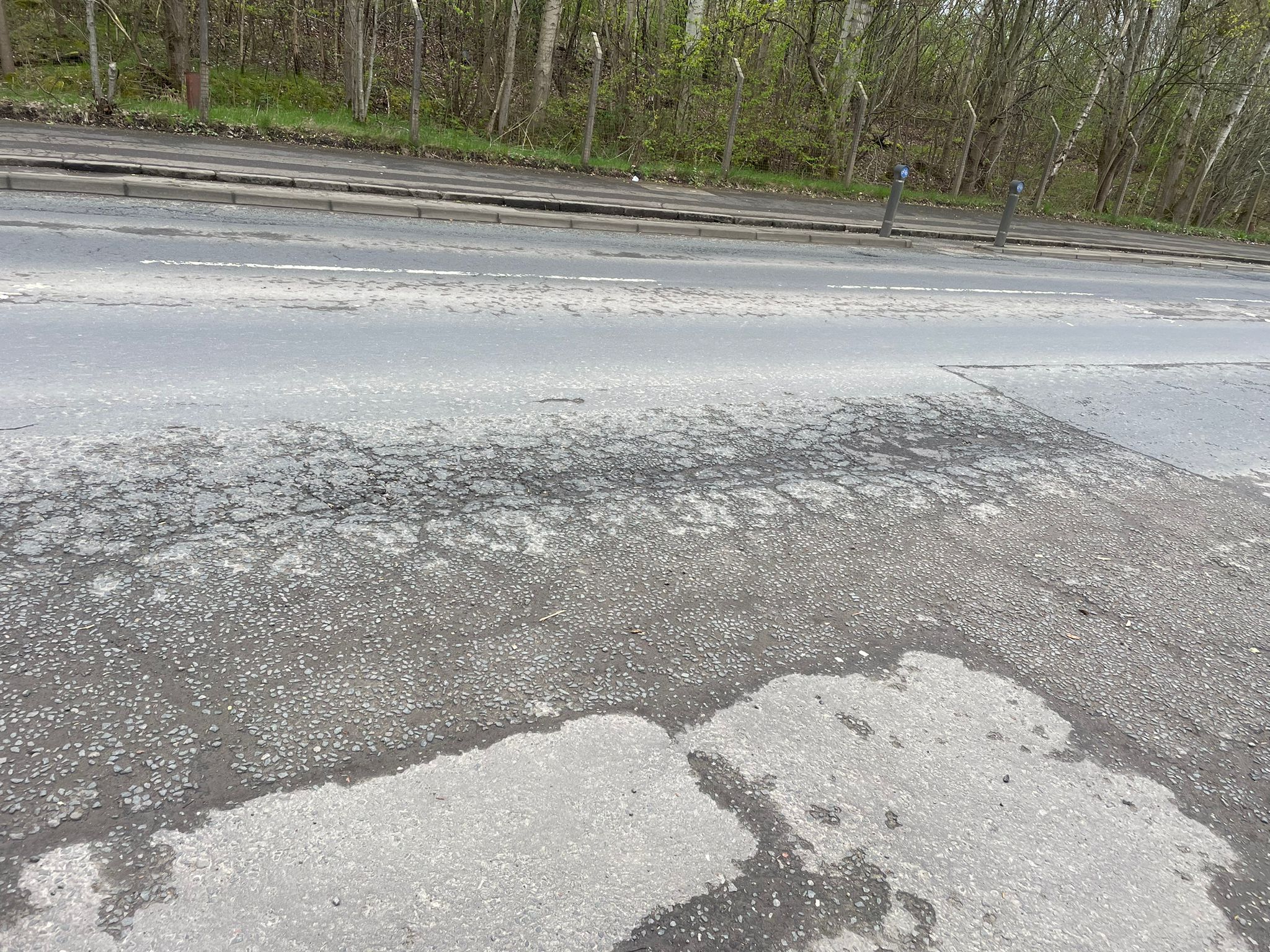
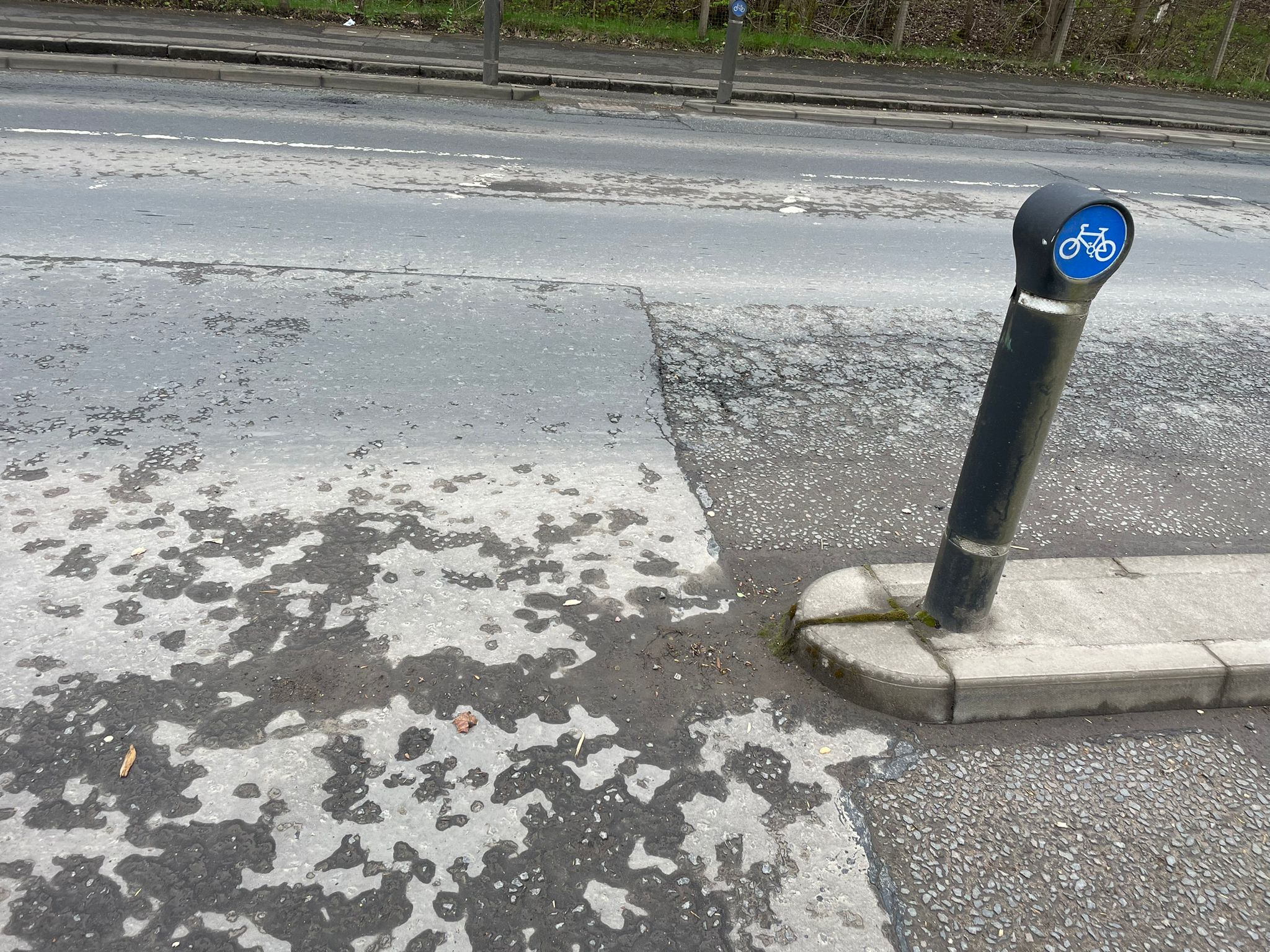
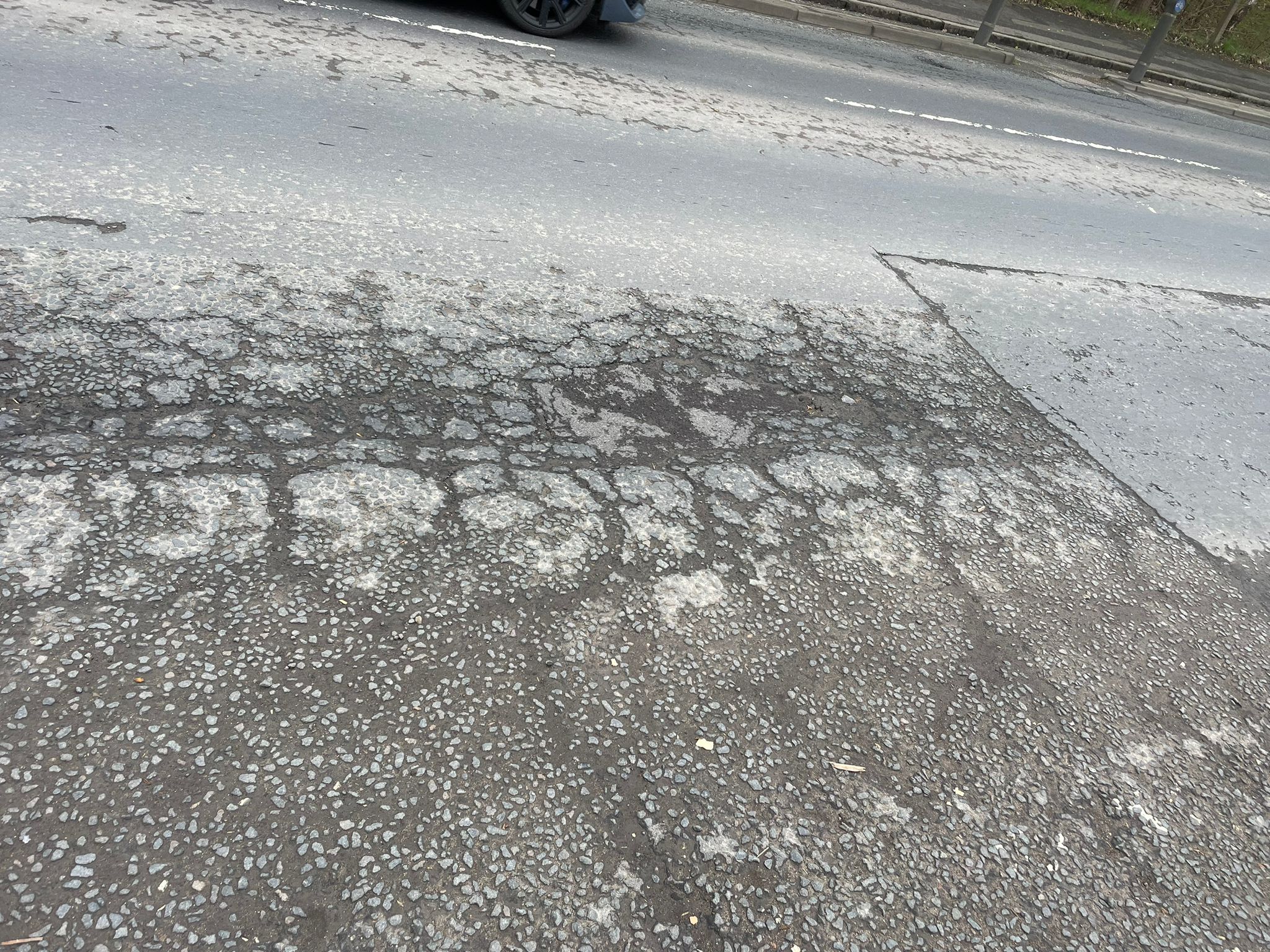
When a road shows alligator cracking, the sub-base beneath has failed. Patching the surface is futile — the ground continues to move and any repair breaks apart within weeks. This is exactly what Hamilton Road residents have experienced for twenty years. The signs of sub-base failure are all present:
Reptilian-pattern cracking across the surface — the diagnostic sign of sub-base failure.
Potholes returning in the same location every year — patches cannot hold when the foundation beneath is broken.
Water pooling in large areas — the asphalt can no longer shed water, accelerating further breakdown.
Road over 20 years old carrying HGV volumes it was never engineered to handle.
All of these conditions exist on Hamilton Road today. BCC highlighted to NRS that patching is therefore not suitable and a full structural survey is needed — the road cannot cope with the volume of HGVs it is being asked to bear.
Proposed Solutions
- !
Full Resurfacing — MV Station to Blackbear Roundabout
Not patching. A full structural survey of the sub-base and complete resurfacing of the entire route. NRS has approved part of this for 2025–26. We want it extended and delivered in full.
- !
Vibration Monitoring
Formal vibration monitoring to produce evidence of structural damage to homes. This data is essential for legal and planning leverage.
- !
Flashing Speed Signs
Replacement and new flashing speed signs at two points: approaching from Blackbear heading west into town, and after Dogs Trust at the traffic lights.
- ~
Monthly Deep Clean Schedule
Regular jet-hosing of all pavements, bollards and cycle lanes along Hamilton Road. Monthly minimum. Cleaned at a reasonable time — not 8am Sunday or 11pm.
- ~
Updated Dust Monitoring
Current data is from 2015 and inadequate. New monitoring needed to assess air quality impact on residents.
- ~
No Right Turn Exiting Patersons
A restriction to prevent HGVs turning right from Patersons onto Hamilton Road, reducing conflict and dust.
- ◈
Pedestrian Crossing — Dogs Trust to Mailcoach
A safe crossing point for residents and bus users between Dogs Trust and Mailcoach pub. Currently unsafe to cross.
- ◈
Cycle Lane Redesign — Blackbear to Dogs Trust
Reconfigure the cycle lanes to mirror the layout further along Hamilton Road, pushing HGV traffic further from homes and improving maintainability.
- ◈
Bus Shelters at All Stops
For resident and pedestrian safety. Currently passengers are exposed to fast-moving HGV traffic while waiting.
- ◈
M74 Off-Ramp — Revisit Proposal
Re-examine whether an M74 off-ramp could redirect through traffic away from Hamilton Road entirely.
- ◈
Re-classification — A Road to B Road
Formally reclassify Hamilton Road from an A road to a B road, reflecting the nature of the route and strengthening the legal and planning case for traffic management measures.
! Immediate priority ~ Short term ◈ Longer term / design
Our Rights — The Law Is On Our Side
The Broomhouse community is not asking for favours. The law provides multiple, layered protections — all of which GCC and Scottish Government have a duty to uphold. These are not aspirational — they are legal obligations.
Important note: This summary is provided for community information purposes only and does not constitute legal advice. Anyone considering formal legal action should seek independent legal advice. The Environmental Rights Centre for Scotland (ERCS) offers free advice to communities on environmental and planning law.
How You Can Help
The strength of our case depends on the evidence we can present. If you live on or regularly use Hamilton Road, you can contribute directly.
Photograph and Video the Problem
Date-stamped photos of potholes, dust, blocked cycle lanes, parked lorries, and cracking to properties are powerful evidence. Any dashcam videos of speeding vehicles, dust clouds, and road condition helps build the picture. Note the date, time and direction of travel where possible. Send them to BCC at broomhousecommunity@gmail.com
Sign the Petition
Show your support for action by signing the petition — it will be presented to our councillors, MP, MSP, Glasgow City Council Planning and NRS.
Sign the Petition →Log Out-of-Hours Operations
If Patersons of Greenoakhill are operating before 7am or after 6pm — note the date and time and report to BCC. This enables us to report to GCC planning enforcement team.
Report Speeding
You can report speeding on Hamilton Road by calling 101. Alternatively, use the official online channels: GCC online form or Police Scotland. Volume of reports matters.
Attend the Next Meeting
You can come to the next CC meeting — August 2026 (date to be confirmed). Contact BCC to register your interest: broomhousecommunity@gmail.com
Contact BCC Directly
Broomhouse Community Council wants to hear from you. Share your experience, submit evidence, or ask questions at broomhousecommunity@gmail.com